DISTINGUISHING TRUE-FALSE
Some comments about fakes
Hair ornaments are still not in great demand, sales are not easy, so prices remain reasonable. This is a positive sign!
Put yourself in the shoes of a forger: why complicate one's life making a fake that will not reach a very high price and be rather hard to sell? Better to direct ones attentions to paintings or Chinese porcelains or bronze statues. Thus collectors are a little protected.
The making of celluloid material was abandoned a long time ago because of its flammability. High quality horn has become difficult to find today for animals are too domesticated and industrially fed. Turtles, even protected, are scarce for those who hunt them anyway. Last but not least, the work required for making a piece need sophisticated skills and a great deal of hours. However, the world of forgery is more complex than it seems to be.
In Africa, many artifacts have no ritual value because they were made according to the request of a governor during the colonial era. A lot of them are now in museums. So they can be regarded with some interest.
However, some combs today sold on African markets to tourists can be called "genuine fakes»!
I suggest you to have an accurate look to the 'Ashanti' comb on photo 1. Then on photo 2.
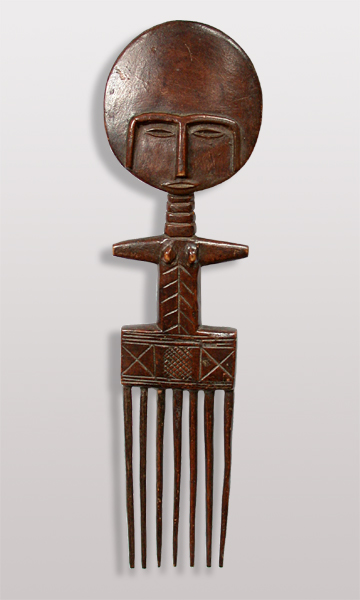
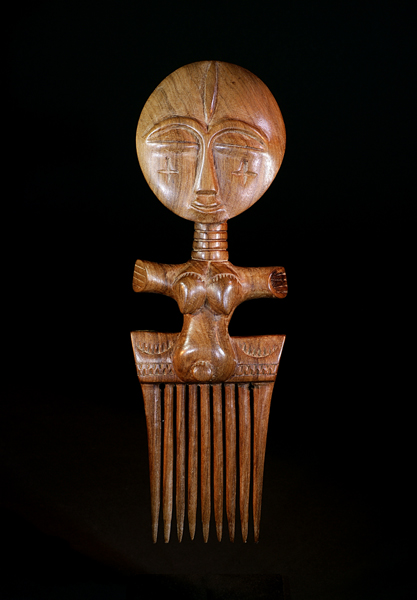
On this last photo, the teeth should be much longer. Their triangular shape refers more to Baule style, as well as their geometric design. Besides, the comb is perfectly carved, overpolished, obviously made for European or American people. This comment does not implicate the sculptor which is on the contrary very skillful. But the comb has lost its identity to become a good.
Among our African stock, there are series of combs like this one. They were requested by a French person who served overseas during the 60-70s. So we keep them in the collection as colonial pieces.
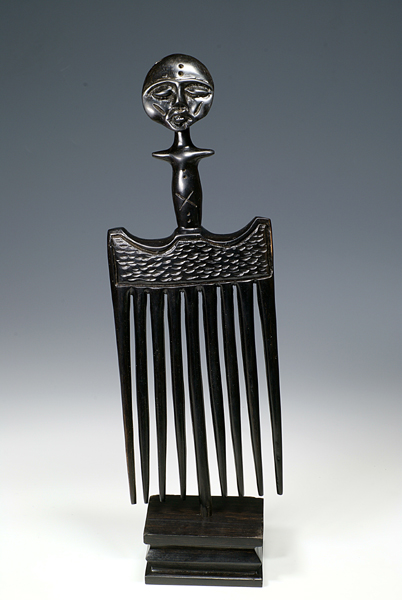
Now, look at the photo 3. The comb has a longer tooth to stand into a base, obviously as a decorative object. It is made out ebony whereas Akan combs are never of this wood. At last, note on the photo 4 the plate part. This crude carving has no meaning. It should be geometric design. So this comb is definitely a fake.

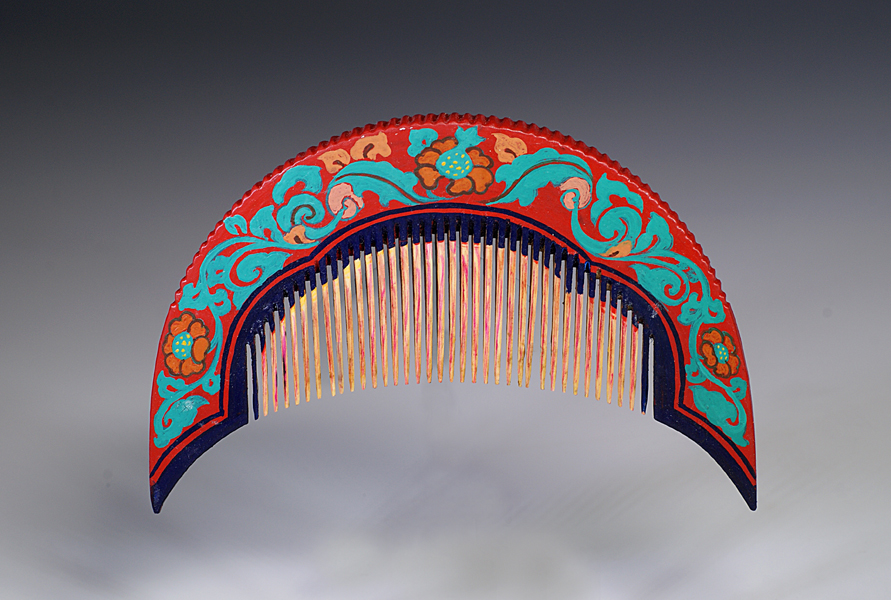
A final note: you cannot call «fake» an item a century old, which shows a great respect for traditions. In Ancient China and until the nineteenth century, it was commonplace to make exact facsimiles of old pieces. Museums consider them as "archaistic " (photo 5 - photo 6).
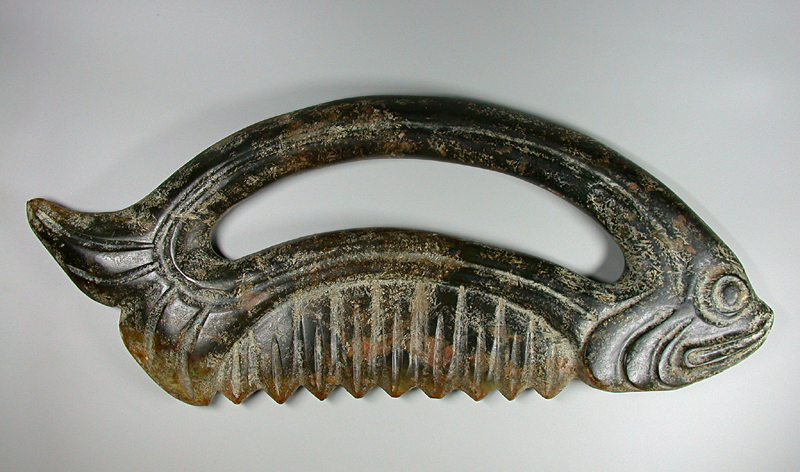
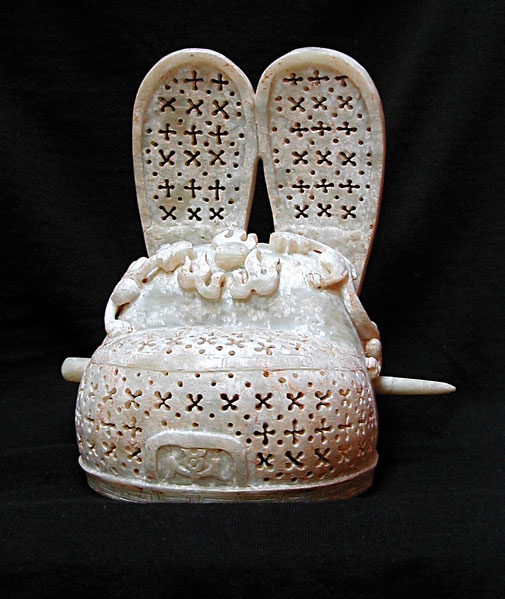
It is important to keep in mind that only Western cultures give value in itself to creativity. This concept comes from the recent importance attached to the individual. On other continents, the person is only a link in the group, dependent on society as a whole. So his submission to the aesthetic rules is required.
Some museums make replicas of ancient art, but they label them clearly: Egyptian combs from Le Louvre, Etruscan combs made in Italy ... they only have a decorative interest.
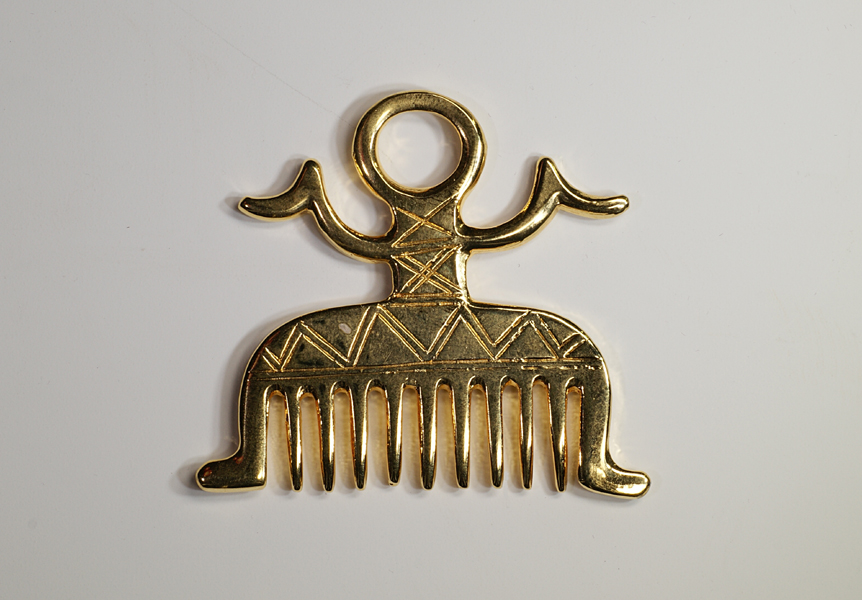
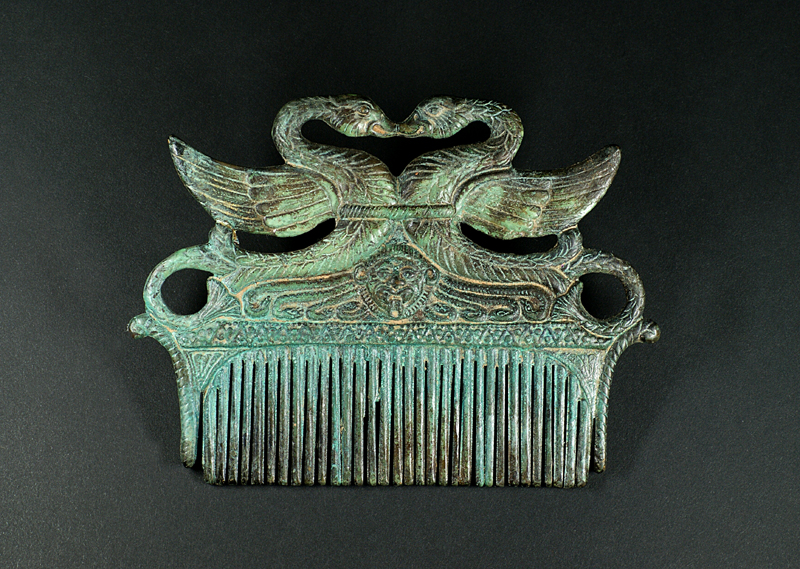
To close this chapter, don't forget recent items which are not necessarily fakes. For example, members of ethnic minorities who live according to their traditions (Miao people in China, some tribes in Africa or Indonesia). They purchase ornaments for personal purposes at their own markets.
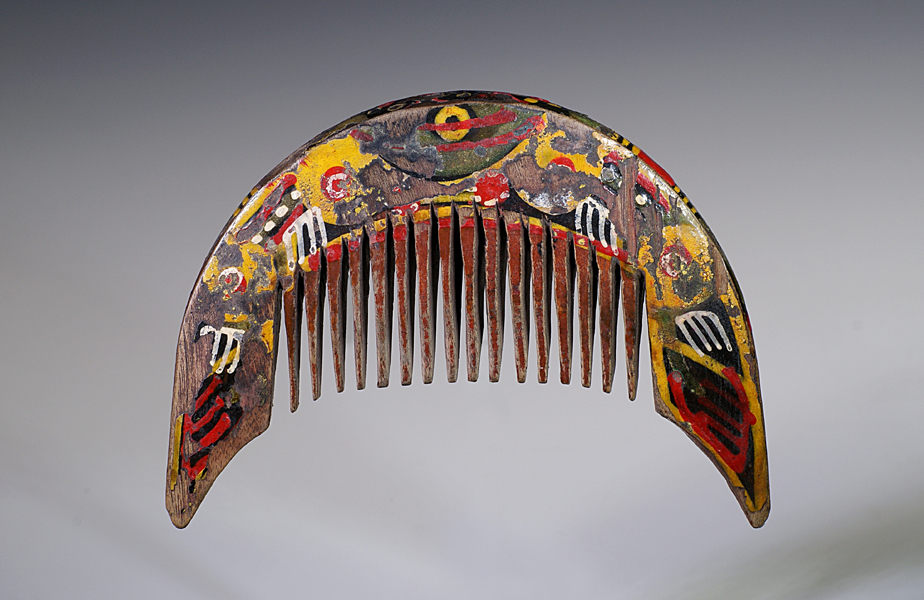
An artifact is genuine when it is made for the purpose for which it will be used and not for other purposes (tourism, collecting ...)
In conclusion, knowledge and reflection, together with intuition, are the best guarantees for purchasing authentic objects. We must ask ourselves the question: «Does this object affect me? Does it have a soul?»